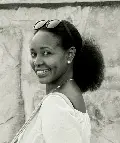
Today, Bumbogo is widely seen as one of Kigali’s fast-growing suburbs, home to expanding residential neighbourhoods, key universities, and an emerging industrial zone. But for people like Aimée Solange Nkundanyirazo, the area carries memories that are far heavier than its current promise. Behind the quiet hills and new developments lies a past marked by loss, fear, and survival, a past that took from her not just a father, but the very foundation of her family’s life. Her father, Ephrem Nkundanyirazo, was killed during the 1994 Genocide against the Tutsi, by the same people he treated and loved. The love and care he showed to people was not enough to save him. “He loved people deeply, especially his patients. His life was about helping others. That is who he was,” the daughter, who carries his name, Nkundanyirazo recalls, her voice carrying both pride and the weight of memory during an interview The New Times. A life built on care and responsibility Nkundanyirazo was born in 1951 in Rubungo, in what is now Bumbogo Sector, Gasabo district. His path into medicine began in his home area, where he attended primary school before continuing to St. André in Nyamirambo, for his secondary education. Like many Rwandans of his generation, his life was shaped by displacement. ALSO READ: Genocide: Mentally ill patients killed at Ndera hospital remembered In 1973, amid ethnic persecution, he fled to Burundi, where he continued his studies and later began working. It was also there that he built his family. Of his six children, five were born in exile. Yet, even in exile, his sense of duty remained anchored at home. In 1987, after the death of his brother, Nkundanyirazo made the difficult decision to return to Rwanda to care for the children left behind and support the extended family. It was a choice that spoke to his character, one rooted in responsibility, compassion, and an unwavering sense of obligation. “It was not an easy time to come back, but he felt he had to. He believed in taking care of family, especially when they needed him most,” Nkundanyirazo recalls, noting how her father stepped in to pay school fees and provide for relatives whose mother had no income. Back in Rubungo, he resumed his life and work with quiet determination, taking up his role at CARAES Ndera Neuropsychiatric Hospital as an assistant medical officer, a position that, though formally below that of a doctor, often required him to carry out critical medical responsibilities. ALSO READ: Keeping memory alive: A genocide survivor’s promise to Rwanda “They called it assistant medical, but he treated patients like a doctor. He did everything he could for them. He was committed, and he loved what he did,” Nkundanyirazo recalls, describing a man whose identity was inseparable from his work of healing. A home marked by love, shadowed by fear While the family rebuilt their life upon return to Rwanda, the environment around them was increasingly tense. By the late 1980s, suspicion and hostility toward returnees had become part of everyday life. “We were still young, but we could feel it. People would say we had come from Burundi to spy, that we were connected to the Inkotanyi. There was already mistrust,” Nkundanyirazo recalls, describing a climate where belonging was constantly questioned. Soldiers would frequently raid their home, interrogating and beating her mother as they demanded to know her father’s whereabouts and accused him of collaborating with the RPF. “They would come, sit her down, beat her, and ask where he was, what he was doing, whether he was giving information. It was something we witnessed as children, and it stayed with us,” she says, reflecting on how violence and intimidation had already begun shaping their lives long before 1994. Despite this, Nkundanyirazo remained deeply connected to his community. He treated people regardless of their background, building relationships that transcended the divisions taking root around them. ALSO READ: After 31 years, Genocide survivors persist in search for lost loved ones One such relationship would later become critical to the family’s survival. “There was a man whose wife had been badly burned. My father treated her at home until she healed. After that, they became very close, like family,” Nkundanyirazo recalls, explaining how acts of kindness forged bonds that would later stand against unimaginable violence. A warning, a separation, a turning point When the genocide began, it was this same neighbour who came with a warning that would change everything. “He told my father that he was number one on the list at the sector. They had planned to kill him and hang his body in our new house,” Nkundanyirazo recalls, the chilling detail underscoring how systematic and personal the targeting had become. Faced with imminent danger, Nkundanyirazo made the decision to flee toward Ndera, where he worked. His family remained behind, hidden by the same neighbour who had risked everything to protect them. “They hid us in their home, even though they were also hiding others. It was not easy, but because of them, we survived,” she says, acknowledging the courage of those who chose humanity in a time defined by its absence. A doctor in a place of death At CARAES Ndera Neuropsychiatric Hospital, where Nkundanyirazo had dedicated his professional life, the situation quickly deteriorated as the genocide intensified. The hospital, once a place of care, became a site of fear and vulnerability. Historical accounts show that Ndera was among the locations where patients, staff, and those seeking refuge were targeted. Many mentally ill patients, already among the most vulnerable, were abandoned or killed as violence spread. Yet even in those conditions, Nkundanyirazo continued to work. “People were being brought from places like Kanombe, wounded and in need of help. He would leave where he was hiding, go and treat them, then return,” Nkundanyirazo recalls, describing a man who refused to abandon his calling even as danger closed in around him. ALSO READ: Genocide survivor Nduwamungu reflects on overcoming “urge to avenge family” He sought refuge in a nearby seminary, believing it might offer protection. “He believed that being among religious people would keep them safe. He thought that would protect them,” she says, capturing a hope that many held at the time. The day safety disappeared That hope was shattered on April 11. Attackers descended on the seminary where Nkundanyirazo and others were hiding. Those inside initially resisted, refusing to hand over the people who had sought refuge there. “A priest refused to give them up. They shot him. Another was injured and left disabled,” Nkundanyirazo recalls, her account aligning with broader testimonies of how even sacred spaces were violated. Eventually, the attackers forced their way in. “They entered and killed them. That is where my father died,” she says, her words simple but heavy with finality. In that moment, a man who had spent his life saving others was killed in a place he believed would preserve life, a tragic reflection of how the genocide erased not only lives but also the very idea of sanctuary. A letter that could not be answered Before his death, Nkundanyirazo had written to his wife, asking whether there was any way for the family to reunite. ALSO READ: Bugesera: Survivors recall Pastor Uwinkindi’s atrocities as 150 Genocide victims are laid to rest “He asked if we could find a way to reach him, but my mother told him it was impossible. There were roadblocks everywhere. We would have been killed before we got there,” Nkundanyirazo recalls, describing a painful reality faced by many families who were separated by violence and left with impossible choices. They never saw him again. Survival in fear At just 16, Nkundanyirazo experienced the genocide with a clarity that has never faded. “It lasted only days before we were rescued, but to us it felt like years. Every day felt endless,” she says, describing a period where time stretched under the weight of fear. Hidden in homes, bushes, and open spaces, survival became a constant struggle. “There were times we stayed in the rain, times we drank rainwater just to survive. We had a small child with us, and keeping him quiet was a matter of life and death,” she recalls, illustrating the fragile line between survival and death. The violence they witnessed shattered any remaining sense of trust. ALSO READ: Rugeshi Hill: A survivor’s memoir of memory, loss, and rebuilding after Genocide “We saw people become inhuman. Even someone who had been my mother’s student attacked her. They beat her. They treated us brutally,” she says, her account reflecting the betrayal that many survivors endured. At one point, attackers found them but believed they were already dead. “That is how we survived that moment. They thought we were gone,” she says. Rescue and the long road back Their ordeal ended when the Inkotanyi reached them. They saved us, they gave us clothes, food, they took care of us. They spoke to us, comforted us,” Nkundanyirazo recalls, describing the moment when fear gave way, however briefly, to relief. They were taken to Byumba, in the RPF Inkotanyi zone, where they began the slow process of recovery. “My mother was only 32 at the time. She had lost her husband, her home, everything, but she still had to raise us,” she says, reflecting on the strength required to rebuild after such loss. Despite everything, the family found a way forward. “We went back to school, thanks to the Genocide Survivors Fund (FARG),” says Nkundanyirazo, who works in the mental health department at Rwanda Military Hospital. ALSO READ: How Genocide survivors are rebuilding through work at one company “Today, among my siblings, there is a doctor, an engineer in agriculture, and an ICT specialist. We were all able to study and rebuild our lives. We have been able to move forward,” she says, a testament to resilience in the face of devastation. A family nearly erased The genocide’s impact on their extended family was staggering. “Our family was very large, but many were killed, especially on our hill in Bumbogo,” Nkundanyirazo recalls, describing how entire branches of the family tree were wiped out. Groups known locally, including those referred to as “Abakonya,” carried out killings and burned homes, leaving destruction in their wake. “In my grandfather’s family, there were about ten children, but only two survived. Overall, more than 100 members of our extended family were killed,” she says, the numbers underscoring the scale of loss. Those who had fled earlier waves of violence to countries like Burundi, Uganda, and Tanzania later returned, helping to rebuild what remained. ALSO READ: ETO Kicukiro survivor recalls betrayal, humiliation and the walk to death “Those who were outside the country came back, and together we tried to rebuild the family. But the loss is something that remains,” she adds. Remembering the man beyond the tragedy Amid the pain, Nkundanyirazo holds on to memories of who her father was beyond the circumstances of his death. “He was calm, kind, and very loving. He loved his family, and he loved people,” she says. One of the memories that stays with her most is the relationship between her parents. “I once asked my mother if they ever had conflicts. She told me that disagreements happen, but whenever they did, they would go into their room, talk, and resolve it. That is why we never saw them fight,” she recalls, a small but powerful reflection of the environment in which they were raised. It is in these details that Nkundanyirazo’s legacy lives, not only as a victim of genocide, but as a father, a husband, and a man defined by compassion. Memory, gratitude, and the choice to move forward As Rwandans continue to mark the 32nd commemoration of the Genocide against the Tutsi, Nkundanyirazo reflects on both the pain of the past and the progress of the present. “Every year, it is heavy. You remember everything. You think about what was lost,” she says, acknowledging the enduring weight of memory. At the same time, she expresses gratitude, for survival, for the country’s recovery, and for the path Rwanda has taken today, the education she and others received from the government and welfare support. “When I look at where we are today, I thank God. We are alive. We have rebuilt. We have a country that is peaceful,” she says, pointing to the importance of unity and reconciliation in preventing cycles of violence. ALSO READ: Survivors want decent burial for 17,000 Ndera Genocide victims “There could have been revenge, but there was a decision to build peace, to bring people together. That matters,” she adds, particularly thanking President Paul Kagame for leading the country through turbulent times. A life that still speaks In sharing her father’s story, Nkundanyirazo is not only remembering a life lost but also preserving a legacy of humanity in the face of inhumanity. Ephrem Nkundanyirazo was a man who chose to care, even when the world around him turned away from compassion. He treated the wounded, comforted the suffering, and remained committed to saving lives until his own was taken. “He never stopped being who he was,” Nkundanyirazo says. And in that truth lies a quiet, enduring legacy, one that continues to speak, not only to his family, but to a nation still remembering, still healing, and still choosing life.