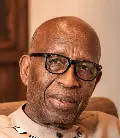
As President Paul Kagame marks his 69th birthday on October 23, 2026, I offer Him warm wishes for good health, strength, peace and many more years of fulfilment with his family and the people he so diligently serves. This anniversary is also an occasion to reflect on the responsibilities he assumed while still young, and on what that journey can teach younger Africans in general and Rwandans in particular. Many young people know Kagame as the experienced President addressing international gatherings and guiding Rwanda’s transformation. They should also remember the young man who carried extraordinary responsibilities before the country’s recovery could be imagined with confidence. Born on October 23, 1957, he was 32 when he assumed military command during the RPF liberation struggle in October 1990, shortly before his 33rd birthday. He was 36 when he became Vice-President and Minister of Defence in July 1994, and 42 when he became President in April 2000. Congratulations yet again Mr President. Those ages deserve reflection. At stages of life when many are still finding their direction, He was confronting decisions involving lives, a people’s survival and the future of a devastated country. Experience accumulated through carrying responsibility, learning and persevering under exceptional pressure. To say “Thank you, Kagame” on this birthday is to recognise that long journey of service, and the choices it helped make possible: choices about survival, national unity, public responsibility many of us proudly shared and the right of an African country to shape its future. Especially this right to choose the best way to do business. For younger Africans seeking positive change, Rwanda offers a compelling subject for study. Its experience raises a demanding question: how does a country move from devastation towards institutions, services and ambitions that its people can build upon? The answer begins well before the buildings and technologies that attract visitors today. It begins with exclusion, exile and the conviction that a country must belong to all its citizens. The RPF liberation struggle, launched in October 1990, emerged from a history in which generations of Rwandans including myself had been denied a secure place in their homeland. Under Paul Kagame’s military leadership, that struggle ultimately confronted the genocidal government in 1994. The final capture of Kigali on July 4 became the defining milestone commemorated as Liberation Day; military operations continued afterwards. The defeat of the forces carrying out the Genocide against the Tutsi made national reconstruction possible. No account of development should pass quickly over that reality. Before questions of investment and innovation came the immediate duty to stop extermination and enable survivors to live. Thanks again, Mr President. The United Nations’ own independent inquiry led by former Swedish Prime Minister Ingevar Carlson subsequently identified failures involving the UN leadership, Secretariat, Security Council, peacekeeping operation and wider membership. Rwanda’s insistence today on taking responsibility for its security must be understood against that experience of blatant abandonment. Yet military victory could not, by itself, determine the society that would follow. Another set of choices was necessary and He led us into those choices. Rwanda had to rebuild a country whose institutions had participated in destroying part of its population. It had to address justice, displacement, impoverishment and profound distrust. Survivors needed recognition and support. Returning refugees needed a homeland. Children needed a future beyond inherited categories of suspicion. The decision to place common Rwandan citizenship at the centre of reconstruction was therefore fundamental. National unity demanded work in institutions, communities and families. It required remembering the Genocide against the Tutsi accurately while resisting the transmission of collective guilt to children. For young Africans, this is an essential political lesson. Identity can enrich a country, but its manipulation can make citizenship conditional. A responsible state must protect belonging and equal dignity before exclusion becomes an instrument of power. Acknowledging President Kagame’s leadership also means recognising the people whose labour made reconstruction real: survivors who rebuilt families, citizens who returned, public servants who restored administration and glad to be among those servants, teachers, health workers, farmers, entrepreneurs and security personnel. Leadership matters because it can give collective effort direction, continuity and purpose. An institution acquires credibility when a citizen receives a service, when an official answers for a failure, and when public resources serve their intended purpose. Development requires sustained attention to these ordinary encounters. A country cannot build confidence through national ambition alone if everyday administration leaves people stranded. Rwanda’s digital public services illustrate this connection between ambition and practical reform. IremboGov, remotely initiated in 1996 by myself, debated in a full Cabinet workshop at Umubano Hotel in December 1998, in Mille Collins in 2001 and later launched in partnership with the government in July 2015, brought public-service applications and payments onto a digital platform. Its significance lies in the attempt to reduce the distance between citizens and administration. I still believe that technology must still be judged by accessibility. People with limited connectivity, literacy or money must be able to obtain services. The question for other African countries is how digital reform can reduce burdens for citizens while making public institutions more responsive. Health offers another concrete example. The World Health Organisation has recognised the contribution of decentralised care, community-based health insurance and targeted interventions to expanding access in Rwanda. Such progress depends on organisation, financing and community participation as well as facilities. Consider also the use of drones to deliver blood products. In a 2019 account, WHO described cases in which delivery times fell from four hours to 15 minutes. The achievement was practical: bringing a potentially lifesaving product closer to a patient when roads and distance made conventional delivery difficult. This is an approach to innovation that young Africans should examine closely. Start with a human problem. Identify the obstacle. Bring together the institutions, expertise and technology needed to address it. Then assess whether the solution works. Africa has abundant opportunities for such problem-solving: agricultural storage, water supply, medical logistics, energy access and the movement of goods. Ambition becomes valuable when it changes what people can actually do. We did our best. Women’s representation provides a further example of deliberate institutional choice. Following Rwanda’s 2024 parliamentary elections, women held 63.8 per cent of seats in the lower chamber, according to the Inter-Parliamentary Union. That outcome demonstrates how rules and political commitment can change access to national decision-making. Rwanda’s innovation record also offers encouragement. WIPO’s 2025 Global Innovation Index ranked Rwanda 104th and identified it as sub-Saharan Africa’s longest-standing innovation overperformer, measuring performance against its level of development. Rwanda’s experience also challenges a familiar account of Africa’s possibilities. Too often, African countries are discussed chiefly through what they lack, what outsiders prescribe, or what their histories supposedly prevent them from becoming. Rwanda invites a different inquiry: what can sustained African leadership, public organisation and collective effort accomplish? This does not diminish the contribution of international partners. Cooperation can support national priorities through investment, knowledge and finance. Sovereignty becomes more substantial when a country can define those priorities, negotiate partnerships and strengthen its capacity to deliver. For Africa’s younger generations, that is a demanding understanding of independence. It calls for competence alongside conviction: the ability to manage institutions, understand contracts, develop technology, protect public resources and evaluate results. There is also a responsibility that accompanies national security. Rwanda’s history gives exceptional weight to the protection of life and the prevention of renewed atrocity. Across Africa, effective security institutions must be assessed through civilian protection, discipline and accountability. Development needs a secure foundation, and citizens need confidence in those entrusted to provide it. Thank you President Kagame for devising national security strategy and solutions. Rwanda’s choices can inspire Africa without becoming a prescription for every African country. Histories, institutions and political conditions differ. The productive task is to study decisions carefully: what problem was being addressed, what resources were available, what changed, and what difficulties followed? A country also owes its younger citizens the capacity to renew its achievements. Education, ethical public service, enterprise and institutions able to learn from mistakes will determine how an inheritance survives. The next generation must be equipped to carry progress forward under circumstances its predecessors could not fully anticipate. For young Africans, Kagame’s early responsibilities carry a particular message: youth can be a time of consequential service. Serious preparation, integrity and the willingness to accept difficult tasks need not wait for seniority. The continent needs young people who can combine imagination with discipline and commitment with competence and abnegation. Their service will take many forms. A young researcher improving agricultural yields, a nurse strengthening community care, an engineer solving a water problem and a public servant protecting public funds all contribute to national transformation. Each can begin with the responsibilities within reach and earn the trust required for larger ones. President Kagame’s birthday also invites us to acknowledge the human weight of leadership. Public office brings decisions whose consequences extend far beyond the officeholder. Decades of such responsibility deserve thoughtful recognition. My wishes extend to his family, who share a life shaped by public duty, and to the comrades and citizens whose sacrifices form part of this national story. Mr President, thank you for the leadership through which you have helped Rwanda recover the confidence and capacity to shape its future. Thank you for helping make African possibility visible through decisions, institutions and results that younger generations can study. May you enjoy good health, renewed strength and the happiness of seeing younger Rwandans carry the country’s achievements further. May the years ahead bring peace and fulfilment to you and your family, and continued progress to Rwanda. The tribute younger Africans can carry into their own lives is a commitment to useful work. They can study this history, question carefully, prepare seriously and take responsibility for positive change in their communities and countries. Happy birthday, President Kagame. Rwanda’s choices are inspiring Africa, and the young Africans drawing encouragement from this journey have their own chapters of service to write.