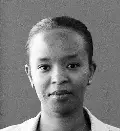
The government is targeting an increase of more than 50 per cent in the productivity of priority food crops over the next five years as Rwanda seeks to build a more productive, resilient and commercially oriented agri-food system. The target is part of the country’s National Strategy for Transformation 2 (NST2) and the fifth Strategic Plan for Agriculture Transformation (PSTA5), alongside an ambition to achieve annual agricultural growth of more than six per cent. ALSO READ: 10 major projects to boost agriculture production Speaking in an interview with The New Times' Alice Umutesi on the sidelines of the just-concluded Africa Food Systems Forum in Kigali, Solange Uwituze, the Minister of State in the Ministry of Agriculture and Animal Resources (MINAGRI), outlined the measures being taken to raise productivity and the challenges that must be overcome. What is holding Rwanda back from getting more food from the land it already has? Rwanda's immediate ambition is to build a more productive, resilient, commercially oriented and technology-driven agri-food system, one that produces more from our limited land, improves farmer incomes, creates jobs, strengthens food and nutrition security and generates greater value from agriculture. Under NST2 and PSTA5, one of our key targets is to increase productivity of priority food crops by more than 50 per cent, while achieving annual agricultural growth of more than six per cent. We are also targeting expansion of irrigated land from around 74,000 hectares today to more than 130,000 hectares, alongside stronger post-harvest management, commercialisation and private investment. We have made significant progress to build on. Over the past two decades, maize production increased from approximately 97,000 tonnes in 2005 to about 599,000 tonnes in 2025, more than a six-fold increase. Milk production increased from 142,511 tonnes in 2005 to 1.15 million tonnes in the 2024/25 fiscal year, while fish production increased from 26,581 tonnes in 2016 to 52,439 tonnes in the same year. But our biggest gap is productivity. For example, Rwanda's average maize yield is around two tonnes per hectare, yet some farmers are already achieving 8–10 tonnes per hectare under good agronomic management. Globally, the average is around 5.7-5.9 tonnes per hectare. This means we have a very significant productivity gap to close. The issue is no longer simply getting farmers an input. It is ensuring that farmers receive the right combination of inputs, knowledge, technology, water, finance, insurance and market access at the right time. Another major gap is extension and proximity services. Under the Food Basket Sites approach, we are introducing site-based and more specialised extension services, bringing extension closer to farmers and organising it around specific crops, production calendars and business plans. Can technology and AI make farming more productive without making it more expensive for farmers? Technology will only transform agriculture if it reaches the ordinary farmer. Our approach is therefore not to introduce technology for its own sake, but to identify technologies that reduce farmers' costs, increase productivity, improve access to information or reduce risk and then develop business models that make them affordable at scale. For example, the government is using Rwanda Soil Information System (RwaSIS) to move progressively from blanket fertiliser recommendations towards recommendations based on the soil, crop and location. We are also investing in digital extension. Rwanda is working towards an AI-enabled agricultural chatbot/interactive voice-response service that can provide farmers with timely information on issues such as good agronomic practices, pests and diseases and weather-related information. But we do not believe AI will replace extension officers. AI should multiply the reach of extension. A farmer should be able to receive immediate basic advice through a phone, while extension officers concentrate on more complex field-level issues. Biotechnology is another area where technology can make a major difference. Rwanda has established a legal framework for responsible biotechnology through the Biosafety Law and is investing in scientific capacity. The $14 million Rwanda Biotechnology Capacity Building Project is establishing a Biotechnology Centre of Excellence, while field trials of new varieties of cassava, potato and maize that are disease resistant are undergoing final multilocation trials. On affordability, government's role is not necessarily to permanently subsidise every technology. We want to use public investment, partnerships, risk-sharing and innovative financing models to bring the cost down and create viable markets. A good example is our emerging partnership with private companies in solar-powered irrigation. Under the lease-to-own model, farmers do not have to make a large upfront investment in irrigation equipment. Instead, they make manageable payments over time and eventually own the equipment. How will Food Basket Sites change the way Rwanda produces and markets food? The Food Basket Sites (FOBASI) are one of the most important changes we are making in how we organise agricultural production. The concept is not to create completely new farming areas. Rather, we are upgrading existing Land Use Consolidation sites and organising them as more coordinated, commercially managed production systems. The idea is to bring together, around the same production site and agricultural calendar, the services that farmers need: improved seed, fertiliser and lime, extension, irrigation, mechanisation, insurance, pest and disease management, post-harvest handling, aggregation and market access. Nationally, approximately 495,155 hectares across 13,379 crop-production sites, together with 92,334 hectares of zero-grazing sites, have been mapped for the Food Basket Sites approach. Farmers do not have to wait until 2029 to see results. We have already started seeing them. A concrete example is the Urwonja Food Basket Site in Nyaruguru District, where farmers supported through the approach increased maize yields from approximately 5.2 tonnes per hectare to 8.3 tonnes per hectare in the most recent season. The improvement came from proximity to farmers, site-based extension, better coordination and optimisation of inputs and production practices. Initially, government will provide stronger support to establish and professionalise the Food Basket Sites, including site-based extension and management. But the model is designed to become increasingly farmer- and business-driven. For consumers, the benefits should come through increased and more reliable production, better quality, improved aggregation and storage, reduced post-harvest losses and stronger market linkages. Where does Rwanda need private investment most to transform its agriculture sector? Rwanda needs investment across the entire agri-food value chain. But if I had to highlight the most urgent areas, I would identify irrigation and water management, post-harvest infrastructure, technology and mechanisation, and agricultural finance and risk-sharing. We also need much more investment in storage, cold chains, drying, logistics and agro-processing. Third, we need investment in technology and productivity-enhancing services including mechanisation, digital agriculture, precision soil management, improved seed, biotechnology and climate-smart technologies. Fourth, we need to expand agricultural finance and risk-sharing. We need financing models that combine commercial capital with appropriate guarantees, insurance, blended finance and other risk-sharing instruments. PSTA5 requires approximately Rwf6.62 trillion over 2024–2029, with the private sector expected to contribute approximately 44.2 per cent. Government is therefore increasingly focusing on crowding in private investment rather than trying to finance the entire transformation itself. We are developing clearer investment opportunities around programmes such as Food Basket Sites, Gabiro Agribusiness Hub, horticulture, irrigation, agro-processing, aquaculture, digital agriculture and climate-smart agriculture. Gabiro is designed as a large-scale irrigated commercial agriculture initiative of up to 15,600 hectares, with Phase I covering 5,600 hectares. By 2024/25 fiscal year, about 1,180 hectares had been developed. We are also using innovative financing models. The recent partnership with SunCulture on solar-powered irrigation is an example: through a lease-to-own model, farmers can access irrigation equipment through manageable payments and eventually own the equipment. Rwanda is also using climate finance to crowd in investment. The €40 million Hangaribihe programme agreed with the European Union in August 2026 will support climate-smart and inclusive agriculture. What should be the concrete outcomes of the Africa Food Systems Forum? For Rwanda, the most important outcome of AFSF 2026 should be implementation. First, we will accelerate the transition from fragmented interventions to integrated Food Basket Sites, bringing together production planning, customised inputs, site-based extension, irrigation, mechanisation, insurance, post-harvest management and markets. Second, we will accelerate climate-resilient agriculture, with an ambition to reach approximately 600,000 hectares under Conservation Agriculture by 2029/30, covering the Food Basket Sites. Third, we will accelerate digital and science-based agriculture. This includes scaling digital extension, including the development of AI-enabled farmer advisory services, expanding RwaSIS and customised soil-fertility recommendations, and investing in biotechnology and improved seed systems. Fourth, we will deepen public-private partnerships and mobilise investment. The government will increasingly focus on creating an enabling environment, reducing risks and preparing investment opportunities, while private-sector partners bring capital, technology, management and markets. And finally, we will strengthen accountability for results. The real measure of our post-Summit commitments will not be the number of meetings held or agreements signed. It will be whether farmers are producing more, earning more, facing less risk and accessing better services; whether consumers have better access to nutritious food; whether young people see agriculture as a viable business and employment opportunity; and whether private investors see agriculture as an investable sector. We want to move from commitments to investment, from investment to implementation, and from implementation to measurable results.