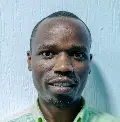
With more than 300 million people in Africa—20 per cent of the continent’s population—facing hunger, more than in any other region, Ireland’s candidate for the Director-General at the Food and Agriculture Organization (FAO), Phil Hogan, says food security must be treated as a global security priority alongside defence. The figure, from the 2026 State of Food Security and Nutrition in the World (SOFI) report, comes as 645 million people, or 7.8 per cent of the global population, faced hunger in 2025, while about 2.7 billion people—nearly one-third of the world’s population—could not afford a healthy diet. Africa accounted for 309 million people facing hunger, compared with 292 million in Asia (6 per cent) and 32 million in Latin America and the Caribbean (4.8 per cent). Hogan is among five candidates, so far, seeking to lead the UN food agency. The others are Spain’s Agriculture Minister Luis Planas; FAO Deputy Director-General and former Italian Agriculture Minister Maurizio Martina; former African Union Commissioner for Rural Economy and Agriculture Josefa Sacko of Angola; and former Turkish Agriculture Minister Mehmet Mehdi Eker. The election is expected in 2027, when current Director-General QU Dongyu of China completes his second four-year term. Qu was first elected in 2019 and re-elected in July 2023. His current term runs from August 1, 2023 to July 31, 2027. ALSO READ: Africa off track to end food insecurity – experts warn Hogan’s priorities include putting food security at the heart of global security, placing farmers at the centre of food-system transformation, integrating climate action into agricultural policy, widening access to technology and innovation, and mobilising investment to create jobs and inclusive growth. Speaking to The New Times in Kigali on September 3, Hogan said he wanted an FAO focused on ending hunger while giving farmers a central role in transforming food systems. “I want an FAO that ends hunger, one where farmers in the rural communities lead the transformation of our agri-food systems and where food security underpins global security and global peace, stability and prosperity,” he said. Hogan has been in Rwanda as part of an East Africa visit and is attending the Africa Food Systems Forum 2026, which ended on September 4. He previously served as European Commissioner for Agriculture and Rural Development and later as European Commissioner for Trade. ALSO READ: Africa’s food systems: Twenty-three years after Maputo, what has changed? Food security as global security Hogan said food security should no longer be treated merely as an agricultural or development issue but as a core component of global security and political stability. “Food security should be seen as important as security and defence. We need to ensure that food security is not forgotten by political leaders in all the discussions that are going on in the world today,” he said. Hogan cited disruptions linked to the Strait of Hormuz as an example of how geopolitical conflicts can affect food systems through energy and fertiliser supplies, agricultural production and food prices. “This is why politics is very important in order to ensure that all countries do whatever they possibly can to reduce and eliminate conflict. And I think that countries like Iran and the United States have to reflect on the damage that is being done to the prospect of food security by the continuation of this particular war in the Strait of Hormuz.” Hogan also cited the UN-brokered Black Sea initiative during the Russia-Ukraine war as an example of international cooperation to keep grain supplies moving to vulnerable markets in Africa. “The United Nations did a good job in the Black Sea initiative with the war in Ukraine when there was a problem with cereals, where there was a blockage of cereals coming through the Black Sea to find these products in the continent of Africa.” He called for countries to resolve conflicts, keep markets and trade routes open, and improve coordination among UN agencies in tackling hunger and nutrition. “We have to look as a United Nations on how we can work more closely together, rather than in a silo mentality, to deliver what we promised to the people in the hunger hotspots and to deliver what we promised on nutrition.” ALSO READ: Four key issues Kampala Declaration should consider for agri-food systems Farmers, climate and technology With smallholder farmers at the centre of Africa’s food systems, Hogan said they should have a stronger voice in shaping agricultural policies. “It should not be a top-down approach, it should be a bottoms-up approach which is inclusive of all the stakeholders and which takes account of each country's specific conditions,” he said. He also wants climate action integrated into agricultural policy and technology made more accessible to smallholder farmers. “We have to integrate climate action into agri-policy if we are to meet our sustainable development goals,” he said. On technology, he said: “This is one of my priorities, to make sure that smallholder farmers have access to new technology and to digital agriculture.” Investment and jobs Hogan said greater investment in the agri-food sector, particularly in Africa, would be essential to creating jobs amid rapid population growth. “We have to concentrate on how we can harness investments in the agri-food sector in order to create jobs, particularly in a continent like Africa where we have a rapidly growing population and where we need jobs in every sector, including agriculture.” He also called for stronger intra-African trade through the African Continental Free Trade Area. “We need the African Free Trade Agreement, the Free Trade Zone. We need all that work to be completed as quickly as possible in order to help intra-African trade. That will create jobs as well.” From promises to action With hunger still affecting hundreds of millions of people globally, Hogan said the next phase of the FAO’s work should focus on turning international commitments into action. He said that, if elected, he would push the agency to work more closely with other UN bodies and strengthen regional and country-level engagement. “Action speaks louder than words, so the FAO should be involved with regional and country offices to be able to make sure that action on the ground and local impact is prioritised.”