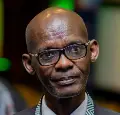
Last year, I witnessed a historic beatification, the result of advocacy by the Community of Sant'Egidio for one of its own members, Floribert Bwana Chui, beatified on June 15, 2025. Bwana Chui was assassinated by no identified killer(s) in July 2007 for refusing a bribe and blocking a shipment of spoiled Rwandan rice from entering Goma, in eastern Democratic Republic of Congo (DR Congo). This raises a question: can refusing a bribe truly count as a heroic virtue worthy of beatification? Rwandan historian Privat Rutazibwa noted that the Church sends an ambivalent message through this beatification. It offers a model of virtue to imitate, but it also tells Congolese youth that refusing corruption is not an ordinary act. Instead, the Church frames it as heroism, even martyrdom. I find this framing contemptuous and insulting. I once questioned the Vatican's focus on Congolese candidates for beatification in the region, but realised it comes down to advocacy. The DR Congo files more petitions, supported by lobbying from groups like Sant'Egidio. This is how the Vatican beatified Bwana Chui and Archbishop Christophe Munzihirwa, another Congolese from Bukavu. The Alliance of Democratic Forces for the Liberation of Congo (AFDL), led by Laurent Kabila, killed him on October 23, 1996. The Church opened his beatification process in May 2016, granting him the title of “Servant of God.” The Jesuits serve as the formal postulators for his cause, but the Community of Sant'Egidio plays an influential role in supporting it. Right after the genocide, Munzihirwa championed the idea of bringing the perpetrators of the genocide against the Tutsi and those who stopped it to the same table. As a founding member of the Groupe Jérémie, he aligned with its mission to denounce violence, defend the oppressed, and document human rights abuses across the Great Lakes region. Munzihirwa held that the Rwandan invasion of DR Congo drove the violence in the country's eastern region and caused broader human rights abuses across the Great Lakes. He viewed the oppressed as the Rwandan Hutu refugees who cannot return to a country where Hutu are killed. On January 30, 1966, in a letter to then US President Jimmy Carter, Munzihirwa accused Rwanda of committing genocide against the Hutu, specifically targeting mostly Hutu intellectuals. Munzihirwa believed only a few of these refugees had committed atrocities and that most were innocent victims. He argued that although these refugees needed to repatriate, the Rwandan government's targeting of Hutu prevented them from doing so. His advocacy for non-guilty ‘Hutu refugees,’ not genocide perpetrators led to his death and subsequent beatification. The notion arose that the repatriation of innocent Hutu refugees, a small fraction of whom participated in atrocities, requires prior dialogue. Under this framework, the roles are inverted: the Rwandan government is perceived as the offender, and the innocent refugees as the aggrieved. Established by Munzihirwa, the “Servant of God,” this foundational narrative continues to direct international diplomacy regarding eastern DR Congo. Thirty years later, it influences the perspectives of Western nations, their media, and UN experts, evidenced by the recent cooperation among Kinshasa, the terrorist group of FDLR, and Sant'Egidio. Forcing both sides to negotiate creates a false equivalence that legitimises the FDLR and sanitises genocide ideology, dishonoring the victims' memory. It reduces the liberators who stopped the slaughter to Western puppets, equating them with genocidal perpetrators. Rwanda is right to denounce talks with FDLR. Engaging with hollow peace deals only grants a genocidal group political credibility instead of dismantling it. Rather than fall into diplomatic traps that keep the FDLR alive, Rwanda must keep demanding its complete, unconditional dismantling. To prevent legitimising terrorists through false equivalencies, Rwanda should follow Foreign Minister Olivier Nduhungirehe’s guidance and strictly demand the disarmament of this group of terror. The writer is a media specialist, historian, and playwright.