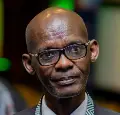
Born in a refugee camp in the Democratic Republic of the Congo, like every other refugee, I grew up deeply engaged in the events unfolding in my motherland. Despite sharing the experience of displacement with my peers, my situation stood apart. My peers were surrounded by extended families—uncles, aunts, and cousins on both sides. My siblings and I were the only children in the camp with no relatives on our father’s side. My father was our only family, and he lived in Uganda. ALSO READ: Ndi Umunyarwanda launched in schools After I repeatedly asked my mother about my father’s family, she finally told me they were all in Rwanda. My father had moved to DR Congo to follow his fiancée’s family, leaving his own relatives behind. ALSO READ: Education and the long struggle against genocide ideology In 1980, I decided to travel to Rwanda to connect with my paternal relatives. My mother strongly opposed this plan, warning me it was unsafe because the Hutu government posed a severe threat to my life. She told me plainly: “They will kill my son.” ALSO READ: Ndi Umunyarwanda: Students rewarded for championing unity I went to my paternal home in Mushishiro. I was imprisoned there, and I was saved from Gitarama prison only because of my Swahili name and my appearance, which led people to mistake me for “Shi,” not Tutsi. My situation stood apart, yet every Rwandan refugee carried a story like mine—distinct in its details but bound to the same motherland. An unbreakable bond to Rwanda resides within every Rwandan, regardless of where they live. That bond is ‘Ndi Umunyarwanda’, a unifying identity that the First and Second Republics tragically failed to acknowledge. ALSO READ: Shangi took everything—I went back anyway Across both republics, Rwanda’s children were exiled from their birthright. They were driven beyond the country’s borders or stripped of their security and their right to education at home. The divisive politics of the post-independence era culminated in the 1994 genocide against the Tutsi. ALSO READ: A preventable genocide, a denied responsibility: What ‘Corridors of Power’ reveals about Rwanda Then came July 4, 1994, the day that marks the historic victory of the liberation forces led by H.E. Paul Kagame, who committed to uniting Rwandans. After the genocide, many outsiders believed Rwandans could never reconcile. They were wrong. The politics of the Rwandan Patriotic Front (RPF), which placed ‘Ndi Umunyarwanda’ at the center of its vision, proved them wrong. ALSO READ: Why Rwanda cannot ignore the threat of genocide ideology next door I will not recount every step of the journey since 1994. Instead, I will celebrate the ‘Ndi Umunyarwanda’ spirit—the unshakable foundation that secures our future. Consider this: a former member of the ex-FAR regime now serves at the highest levels of the Rwanda National Police, as second-in-command to a former Rwandan Patriotic Army officer. Both champion the Ndi Umunyarwanda ethos. Consider this too: just one generation later, the daughters of a genocide convict and an RPF cadre now make national decisions together in Cabinet meetings. And consider this: the son of a former FDLR commander—a group designated as a terrorist organization responsible for promoting genocide—attending the United Kingdom’s prestigious Royal Military Academy Sandhurst, the same institution attended by the President’s son. These examples of the success of Ndi Umunyarwanda are only a few among many, but they clearly show that a united Rwanda now rests on an unshakable foundation. Anyone may question this reality, but modern Rwanda is no longer divided by ethnicity. I see a nation shaped by the spirit of ‘Ndi Umunyarwanda’, a shared identity in which Rwandans see one another not as Hutu or Tutsi, but simply as fellow citizens. It brings me immense joy to witness this generation of children proudly embracing what defines their nation’s sovereignty: “Ndi Umunyarwanda.” July 4, 1994 paved the way for our unity. Happy Liberation Day. The writer is a media specialist, historian, and playwright.