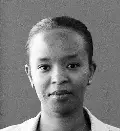
Three decades after surviving the 1994 Genocide against the Tutsi that claimed his entire family, Apolinaire Munyaneza, 53, returns to Rwanda often, not just to reconnect with home but to witness a nation he once thought might never recover becoming, in his words, “a role model for the world.” ALSO READ: Role of local authorities in the planning and execution of genocide against the Tutsi between October 1990 and March 1994 Born in the former Nkuli commune – present day Nyabihu District in Western Province – the father of five now lives in Maine, the north easternmost U.S. state known for its rocky coastline, maritime history and nature areas. ALSO READ: Rwanda urges global action against Genocide denial and ideology “I was born during very difficult times. The Tutsi were facing killings, expulsions, and persecution. In my home district of Nyabihu, the situation was especially severe,” he recalls. His district was home to some of the planners and military leaders who later orchestrated the genocide. “The killing started early. From the beginning of the 1990s, the Tutsi were hunted, attacked, and killed.” ALSO READ: ‘He ordered my mother’s death,’ Genocide survivor’s account of the ‘Butcher of Nyanza’ His village was located near the infamous Mukamira army camp in Ruhengeri, a site long associated with early acts of violence that preceded the genocide. Between 1990 and 1993, his family endured repeated attacks. The day everything changed On the morning of April 7, 1994, just hours after the plane carrying President Juvenal Habyarimana was shot down, Munyaneza’s parents and six siblings were killed. The only exception was his sister, a nun, who was also at school at the time and was later evacuated to Italy. At the time, he was 21. “I was living with a family that had taken me in because returning home for vacation was impossible.” In Gitarama (now Muhanga District), where he was studying – at Kabgayi, killings did not begin immediately. But after days of intense propaganda from state-controlled radio stations, violence erupted. “We went into hiding around April 14,” he recalls. He and others were sheltered by families in Ruli, a small village near Muhanga town, living in fear for almost a month before reaching Kabgayi, a region that hosted thousands of displaced Tutsi seeking protection in schools, parishes, and seminaries. But Kabgayi was no safe haven. “There were night raids, constant killings, women being raped. It was horrible. We survived only when the Rwanda Patriotic Army (RPA) captured the area, on June 2, 1994. That was our liberation.” ALSO READ: June 13, 1994: Remembering one of the battles that defined the RPA struggle Munyaneza stayed in Rwanda for several years afterward, completing his studies and working. He left the country in 2003, and headed to South Africa for further studies. Thereafter, for a short while, he I lived in Swaziland. From there, he lived in Eswatini, and then Botswana, for six years, before relocating to the United States in late 2016. Adjusting to life abroad was not simple. “Anyone who moves away from home faces challenges; new cultures, new languages, new systems,” he says. “But for a genocide survivor, you carry something extra; trauma, the weight of past events, and the memories that never fade.” “Even someone who is not a survivor faces challenges when moving abroad, adapting to a new culture, settling in, learning systems. But for a genocide survivor, on top of those normal challenges, there is the added burden of having lived through genocide. You carry the loss of your family, the trauma, and the scars of what you endured. “You may not feel as strong as others, but living abroad requires not just adapting to a new life, but also confronting and overcoming your painful past, finding the strength to move forward.” Witness to Rwanda’s transformation Despite leaving Rwanda in 2003, Munyaneza has remained deeply connected to his birthplace, returning regularly. In 2025, he returned home three times. “Even from the early years, I would come back every two years,” he says. “If I look back to Rwanda in 1994... there was no life. Over one million people were lost, as well as infrastructure... it was a total mess. Some even said Rwanda was a failed state that would never recover.” But today, he says, Rwanda is a miracle, a country that has become, in his words, a role model for Africa and the world. As a genocide survivor, Munyaneza remembers the struggles in the years immediately following the genocide. “In 1994, 1995, and 1996, survivors were living horrible lives. Housing was scarce, education was difficult to access for children with no parents, and basic infrastructure was practically non-existent.” ALSO READ: Ibuka at 30: Decades of resilience, rebuilding He speaks with particular pride about the evolution of survivor-focused organisations like Ibuka. “If you look at Ibuka, which was founded in 1995, and compare it to today, it’s a huge transformation. “Survivors who had nothing got access to education, housing support, medical care, and real advocacy. Over the years, these organisations have built the capacity to do incredible work, supporting survivors, advocating for them, and addressing the real issues they face.” “Many people visit Rwanda and learn from what they see. They try to implement similar strategies elsewhere because they witness how a country once labelled a failed state has rebuilt itself. From 1994 to today, that journey is something we can all be proud of,” he adds. ‘We live abroad but our roots are here’ With five children growing up in the United States, Munyaneza is determined that they remain connected to their identity and heritage. “We live abroad, yes, but our roots are here. My children visit Rwanda, they eat the food, they see the country’s progress. I take every opportunity to teach them.” His involvement in the Rwandan Community Abroad (RCA) has helped him do exactly that. In Botswana, he served as vice president of the local RCA chapter. In the United States, he served as president and now operates as the secretary of the national umbrella, US-RCA. “We organise community and cultural events and I involve my children in everything. They must know who they are.” Advocacy born from gratitude Munyaneza’s leadership within diaspora communities is rooted in a sense of duty shaped by being a genocide survivor. “I count myself among the fortunate. I was able to study, start a family. Many survivors were left with physical injuries, psychological wounds, or severe trauma.” Seeing others struggle motivated him to help. “I felt compelled to use whatever strength and capacity I have to support my fellow survivors and my community.” In 2020, when Ibuka-USA was founded, Munyaneza became its first Secretary General, a role he considers one of his most meaningful contributions. Munyaneza is currently writing a book about his survival journey, an effort he views as part of his broader mission to preserve memory. “There is a Latin saying: words disappear, but writing remains forever. If I don’t write, then when I’m no longer here, my story goes with me.” For him, the book is a gift not only to his children and extended family, but to all Rwandans, and especially to future generations. ‘Information is your weapon’ As a diaspora leader, Munyaneza has witnessed firsthand one of the biggest challenges outside Rwanda: genocide denial. “In Rwanda, denial is not as visible. But abroad, it’s a serious issue. People lie, distort facts, or claim double genocide. If young people are uninformed, they cannot respond.” His message to the youth is clear: “Educate yourself. Read about the genocide against the Tutsi; its root causes, how it happened, and how genocide denial works. Information is your weapon. Only knowledge can protect future generations.”