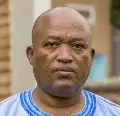
There are moments in the theatre of Africa's Great Lakes Region politics, when satire feels redundant—when reality, in its heartbreaking inversions, performs the work of parody far better than any writer could. The recent pilgrimage by a group of Banyamulenge men to the State House of Évariste Ndayishimiye, is one such moment: a tragicomedy staged with the solemnity of gratitude and the undertones of surrender. Picture the scene. Men from a community that has, for years, buried its dead under the shadow of systematic massacres, displacement, and erasure, arrive not to demand justice—but to say “thank you.” Thank you to a man whose army has been repeatedly accused of operating in deadly concert with the FARDC and the FDLR—the latter being a direct ideological and operational descendant of those who executed the Genocide Against Tutsi in Rwanda. If irony had a capital, it would be this meeting in Gitega. One of the visiting delegates, with a straight face and a microphone, went further; he informed the press that the genocide against the Banyamulenge is “not real.” That it was a hype created by Rwanda. Not exaggerated. Not misrepresented. Not politicized. Simply—nonexistent. This, in the face of years of documentation, testimonies, satellite imagery, NGO reports, and the raw, unfiltered evidence of survivors whose lives have been reduced to a catalogue of loss. Denial, in this context, is not ignorance. It is performance. And what a performance it was. Because standing behind this declaration is not just one man’s bewildering assertion, but an entire ecosystem of complicity. The choreography is familiar: armed groups cleanse territories, civilians flee or perish, diaspora communities issue desperate appeals, and then—like a perverse curtain call—someone emerges to declare that nothing happened at all. If this sounds eerily familiar, it should. History, especially in this region, has a cruel sense of repetition. One cannot help but recall Antoine Théophile Nyetera, a Rwandan Tutsi who dedicated the twilight of his life to defending those who orchestrated and executed genocide. Nyetera was not merely a passive apologist; he was an active participant in the machinery of denial. He appeared as a defense witness in no fewer than eight cases before the International Criminal Tribunal for Rwanda (ICTR), lending intellectual cover to men whose crimes were written in blood. As if that were not enough, Nyetera also took the stand in Paris to defend Pierre Péan, a man who argued—without shame—that Tutsis are liars “by nature and upbringing.” It takes a particular kind of moral acrobatics or blindness to stand beside such a claim and nod in agreement. Not opportunism. Not confusion. Something deeper, darker, and more disturbing. The Banyamulenge delegation’s spectacle in Burundi belongs to this same disturbing lineage. Because what do we call it when victims—or those who claim to speak for them—publicly absolve those implicated in their suffering? What language captures the spectacle of gratitude directed at a system that, by multiple credible accounts, participates in their persecution and massacres? “Stockholm syndrome” feels almost too gentle a term. At least in its classical definition, Stockholm syndrome implies captivity, coercion, and psychological survival mechanisms. Here, the captivity appears self-imposed, the coercion internalized, the survival strategy elevated to political theater. It is as if the logic has been inverted: deny your suffering loudly enough, and perhaps it will cease to exist—or at least cease to matter. Meanwhile, the applause from official quarters was swift and unambiguous. Photos circulated of President Ndayishimiye receiving his guests, all smiles and statesmanship, as though presiding over a reconciliation rather than a reality distortion exercise. On social media, Burundi's Foreign Minister, Édouard Bizimana joined the celebration, amplifying the narrative with the enthusiasm of a man who understands exactly what is being achieved. Because let us be clear: this was not about Banyamulenge welfare. It was about narrative control. If you can produce Banyamulenge voices that deny their own persecution, you achieve something far more valuable than military victory. You manufacture consent. You create doubt. You muddy the waters so thoroughly that accountability drowns before it can even learn to swim. “Look,” the narrative will say, “even they say nothing is happening.” And just like that, massacres become rumors. Displacement becomes migration. Systematic violence becomes unfortunate coincidence. Impunity, in such an environment, is not just possible—it is guaranteed. The diaspora’s repeated warnings, the painstaking documentation by human rights organizations, the testimonies of survivors—all of it becomes background noise, easily dismissed in the face of this curated spectacle of denial. It is a strategy as old as propaganda itself: if reality is inconvenient, replace it with a more useful fiction. What makes this episode particularly chilling is not just the denial, but the reward structure surrounding it. Those who speak uncomfortable truths are marginalized, threatened, or ignored. Those who echo the preferred narrative are welcomed into presidential palaces, photographed, and celebrated. It is a perverse incentive system, one that teaches a devastating lesson: your safety may depend not on resisting violence, but on denying it. And so we return to the opening scene—the pilgrimage, the gratitude, the denial. A tragicomedy, yes, but one with very real consequences. Because while words are being twisted in the halls of power, lives are still being lost in the hills of eastern Congo. The final, bitter irony is this: the more elaborate the denial, the more it reveals the truth it seeks to conceal. One does not need to stage such performances for events that never happened. One does not need to recruit victims to deny their own suffering unless that suffering is both real and inconvenient. In the end, the message sent by this spectacle is as clear as it is chilling: the Banyamulenge can be massacred, and with the right script and actors, even their own voices can be made to applaud.