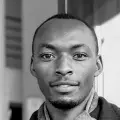
When Pierre Rutayisire arrived in Rwanda as a refugee from eastern DR Congo in 1995, his family had no source of income. They had looted all our cattle and we were forced to flee, recalls the 64-year-old who lives in Mahama Refugee Camp in Kirehe District. Soon after he arrived in Rwanda, Rutayisire started looking for a cow to raise. Today he has four cows and is one of 128 members of a farmers' cooperative that raises 500 cows just outside the Mahama camp. ALSO READ: Refugee welfare: Eight things Rwanda has done to improve their lives He says the cows not only remind him of his youth in Masisi, North Kivu province, but also enable him to provide for his family of five. Life in a refugee camp is difficult, but the cows help me to provide for my family, Rutayisire said. Rwanda has taken care of us and we are grateful to be able to do some economic activities. The cattle herders cooperative is one of the income-generating activities that the refugees have started to support themselves. We currently produce 2500 litres of milk, the cooperative president, Monamis Nzayikorera Rwamuningi explained in an interview with The New Times. We have a milk collection centre that could open soon when we get a power generator. We want to expand the cooperative and sell more dairy products, such as cheese and yoghurt. ALSO READ: How a Burundian refugee turned Rwf800 into a million-franc agribusiness Mahama camp host some 72,000 refugees mostly from DR Congo and Burundi. With foreign aid shrinking, the refugees are encouraged to take advantage of available opportunities to earn a living. For Ornella Teta, who owns a shop in one of the small markets in Mahama camp, being able to start a business as a refugees is an opportunity not be taken for granted. Some people in the camp have hairdressing skills and they need wigs to use, says Teta, who fled DR Congo as a child. When I sell these wigs, I get some income and can afford food for my children. We hear that back in Congo people cannot do business in peace. You start today and soon you're forced to flee. But here in the camp, we can do business in peace and pay taxes and be able to provide for the family. As a refugee, I am very happy to be treated well like Rwandans. We are given the same value. We're thankful for the peace we have. The same sentiment is shared by Ahmedeltayeb Elsamani from Sudan, who sells food products. When we were newcomers here, we struggled and tried to cope with that situation, explains Elsamani, who arrived in Rwanda in 2024. The situation is getting better. Many organisations here engage us in start businesses, explained the Sudanese, who started shop four months ago. While he's still finding out what he can sell to grow his earnings, Elsamani said he was confident life would get better. We are still focused on our culture. We don't understand fully yet which services we can provide in order to reach the big market of Mahama, he said. One of the projects supporting refugees and host communites is called Jya Mbere, which started in 2019, targeting five refugee-hosting districts. The $84 million project funded by the World Bank has supportd socioeconimc activities that has reached tens of thousands of people, including through grants. Some Rwf9.7 billion hass been disbursed in grants to more than 5,500 people who started income-generating activities in businesses, agriculture, textile and hospitality sectors, according to Frank Ngoga, the Jya Mbere project manager. As the project's first phase ends in October, Ngoga said its impact has been significant in access to basic services and socioeconomic investment as well as environmental management. We have been able to employ more than 22,000 people in different sectors, and the focus is on income-generating activities, he said. He also noted that in the refugee-hosting districts the project has supported the rehabilitaion of health facilities, contruction of class rooms, roads among other activities. ALSO READ: Burundian refugees thank Rwanda for dignity, equal treatment Rwanda hosts more than 132,000 refugees, most of whom live in camps. Government officials stress the need for development projects linking the refugees and host communities, through an inclusion policy. It's not good for the refugees to stay redundant, says Gonzague Karagire, the refugee programme manager at the Ministry of Emergency Management. We support the refugees to do business is through empowerment to have their own means to sustain themselves even the humanitarian assistence is not available. Karagire note that the key projects are in agriculture and businesses. Inclusion means that the refugees benefit from opportunities and rights that Rwandans enjoy because they live in the same community. The official said Rwandans have an imperative to treat refugees. Many Rwandans have the refugee situation background and understand what it fells like to be a refugee and how the refugees can be supported to become self-reliant, Karagire said. Rwanda is a country that dignifies the population and refugees cannot be left behind.