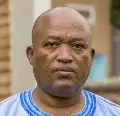
On July 26, 1994, barely a week after the Rwandan Patriotic Front (RPF) had established a Government of National Unity—an unprecedented political move after stopping the Genocide against the Tutsi—a Belgian Catholic priest, Philippe de Dorlodot, penned a text with an intentionally provocative title: Quelques vérités sur l'enfer rwandais (Some Truths About the Rwandan Hell). The document was published later in his 1996 book Rwandan Refugees in Bukavu: New Palestinians? As a member of the Congregation of White Fathers, Dorlodot wielded the kind of moral credibility many Catholic missionaries had in Central Africa. The priest abused this platform by weaponizing pastoral authority to produce a text that, while clothed in humanitarian concern, was a masterclass in moral inversion, political deceit, and genocide denial. With deliberate ambiguity, selective outrage, and thinly veiled justifications for the genocidaires, Dorlodot became a voice not for the voiceless, but for the architects and beneficiaries of a genocide that had just claimed over a million lives in less than a hundred days. This piece is a comprehensive examination of his rhetoric, an unmasking of his sympathies, and a call for accountability within institutions—secular and ecclesiastical—that continue to tolerate theologies of impunity. If hypocrisy were a sacrament, Dorlodot would be its most devout celebrant. Ideological introduction Fr. Dorlodot's text begins with melodramatic flair: The Hutu population floods into Goma on July 14 in a deafening silence. A people, walks silently to escape death. Such poetic stylization might be forgivable if it weren’t used to create a moral equivalence between perpetrators and victims. Nowhere in his introduction does Dorlodot clarify why these refugees were fleeing: not because of abstract 'death,' but because they feared justice. They fled not from a genocidal enemy, but from accountability. This is an eradication of context so flagrant it borders on doctrinal or theological malpractice. Gaudium et Spes, the Second Vatican Council's Pastoral Constitution on the Church in the Modern World, reminds us that any act of genocide and the policy of racial discrimination are crimes against God and humanity and must be condemned as such (GS, No. 27). Yet this priest, Fr. Dorlodot, moves immediately to emotional manipulation. He frames the refugee flight as noble suffering: Better to die of cholera in Zaire than be slaughtered in Rwanda. But who, precisely, was being slaughtered in Rwanda after July 4, when the RPF captured Kigali and put an end to the killing? This isn't empathy; it's obfuscation. Priest with ghostwriters of Hutu Power Early in the text, Fr. Dorlodot claims to quote a grieving father: We were betrayed, our country was handed over to a minority. There’s an embargo on us, but not on them! But this alleged, supposedly Rwandan father, isn't speaking about his missing child; he is voicing political grievances that disconcertingly echo the talking points of the crushed genocidal regime. Fr. Dorlodot doesn't just relay these words; he adopts them, concluding: They feel this betrayal as a profound injustice. The Belgian Priest looks very shrewd at manipulating language to cleanse the blood of mass-murderers. By using anonymous, unverifiable sources, Fr. Dorlodot becomes not a recorder of suffering but a ventriloquist of ideology. The Genocide against the Tutsi, at this point in his narrative, has no distinct moral weight. The perpetrators of genocide are victims, the liberators are aggressors, and he, the priest, is an advocate for an unremorseful political machine. One of the most insidious trappings in Fr. Dorlodot's rhetorical arsenal is his weaponization of words like people, refugees, and victims. Nowhere does he use Hutu in reference to the refugees fleeing Rwanda. Instead, he universalizes their identity as simply people or the population, implying moral neutrality. But when the term Tutsi appears, it is always in a context suggesting power, domination, or manipulation. This linguistic sleight of hand renders the Tutsi invisible as victims and the Hutu anonymous as perpetrators. Fr. Dorlodot erases responsibility through generic terms, absolving the guilty by making their identity indistinct. This is no accident. Language, as Hannah Arendt noted, is never neutral in times of mass atrocity. Genocide depends not only on weapons but on words that dehumanize, obscure, and sanitize. Mocking the dead bodies in Lake Victoria Perhaps the most ghoulish passage in the entire document is Dorlodot's speculation on the fate of 400,000 to 500,000 missing people, including those allegedly drowned and washed into Lake Victoria. He writes: There is no trace of these refugees. Aren’t they the tens of thousands of bodies that washed up in Lake Victoria? This isn't a question; it's a contempt. He ignores the historical fact that the bodies in Lake Victoria were Tutsi victims of genocide, many of whom were dumped into Nyabarongo River and its tributaries, fulfilling the apocalyptic prophecy issued by Léon Mugesera on November 22, 1992—that the Tutsi would be sent to Abyssinia through the river. This Belgian Priest doesn't mention this. He doesn’t mention that the killers systematically used rivers to kill the victims and dispose of the bodies. Instead, he implies that these floating corpses were Hutu killed by the RPF. This is beyond genocide denial; it is desecration. He not only rewrites the genocide—he recycles its imagery for propaganda. The double genocide narrative Having prepared his readers emotionally, Dorlodot introduces his central claim: There are two genocides in Rwanda. One committed by certain authorities, the military, and the Interahamwe, and another by the RPF. This rhetorical strategy is deeply deceitful and inherently corrupt. This Catholic priest recognizes the genocide only to relativize it. The first genocide is described with caveats: certain authorities, Interahamwe, as though this were a marginal affair. And then, like a magician swapping hands, he directs attention to RPF, asserting without evidence: There has been no news of 400,000 to 500,000 displaced people in the Byumba prefecture... Aren’t they the tens of thousands of bodies that washed up in Lake Victoria? This is where Dorlodot abandons even the pretension of truth. Byumba’s displaced were not static entities; they moved south as early as 1992, many ending up in Tanzania or Goma. The claim about bodies in Lake Victoria is not only unsupported but absurdly aligns with conspiracy theories used by genocide deniers. It is worth recalling the UN-mandated International Criminal Tribunal for Rwanda (ICTR) judgment in Akayesu, which explicitly rejected the double genocide thesis, affirming that the genocide was directed solely against Tutsi as such. Fr. Dorlodot's insistence on RPF committing a parallel genocide is not born of fact but of a theological inversion. In his narrative, the agents of salvation are guilty, and the agents of annihilation are misunderstood. The priest is a master of rewriting moral if not legal language just to confuse readers. Just read the juggling of Genocide vs. Crime. Fr. Dorlodot goes further: More than a million refugees poured into Goma and surrounding areas because they were panicked by the RPF... That's genocide! In the southwest... it was the interim government and Radio Mille Collines that incited the population to flee... That's a crime! Notice the disparity in moral language. RPF actions that allegedly induced panic (with no evidence of targeting civilians) are labelled as genocide. Meanwhile, the architects of mass murder, the propagandists of ethnic extermination, are said to have committed a mere crime. This is not semantics; it is a profound moral failure. In Christian ethical tradition, justice is not blind to context. St. Augustine's Just War theory, often cited in Catholic moral theology, emphasizes jus ad bellum (right to war) and jus in bello (right conduct within war). The RPF stopped a genocide. The genocidal government did not incite panic; it orchestrated extermination. Dorlodot continues with majoritarianism as theology: While a negotiated political solution is needed—one that respects the respective rights of the Hutu (85%) and the Tutsi (15%)... This framing reveals a chilling logic. By anchoring legitimacy in demographic majority, Dorlodot legitimizes the very ideology that made genocide thinkable. The 85% vs 15% binary was a cornerstone of Hutu Power propaganda: a pseudo-democratic justification for ethnic exclusion, dispossession, and ultimately, mass slaughter. But his claim in July 1994 that 85% of the population were still Hutu and 15% Tutsi reveals something more grotesque. Essentially, no Tutsi had been killed. It is as if the million dead didn't exist. As if the genocide had not decimated families, villages, an entire intelligentsia. What kind of arithmetic counts the dead and still finds them alive? Pope John Paul II, in Evangelium Vitae, reminded the world that a majority consensus does not create moral truth. But for Fr. Dorlodot, moral right stems from numbers. It is known— genocidaires in Rwanda committed the crime to maintain the reality of absolute demographic majority. In his schema, the Tutsi are forever minorities, suspect elites whose pursuit of equality is an existential threat. One wonders: would he apply the same logic to early Christians in pagan Rome? Or to Catholics in Protestant England? Dangerous self-fulfilling prophecies In his document, Fr. Dorlodot predicts that the war will resume in... the not-so-distant future. It was not a prediction; it was a blueprint. By mainstreaming the grievances of the genocidaires, Dorlodot contributes to the ideological fuel of future wars. His language is echoed in the rhetoric of groups like the FDLR, who emerged from the same refugee camps he romanticized. ALSO READ: Belgian lawyer on why genocide ideology doesn’t dissolve three decades after dispersion of genocidaires These same ideas underpin the genocidal discourses now circulating in eastern DR Congo, where Hutu extremists accuse Banyamulenge and other Congolese Tutsi of being part of a Rwandan conspiracy. The war he forecasted is one he helped intellectualize. Let us get into this satirical interlude, with “A confession in Bukavu.” Let us imagine, for a moment, that Dorlodot is back in Bukavu, not writing op-eds but sitting in a confessional booth. A survivor walks in: Survivor: Forgive me Father, for I have lost everything. My parents, siblings, neighbours—all killed because we were Tutsi. Father Dorlodot: Hmm. Are you sure it wasn’t just a political misunderstanding? Maybe both sides were extreme. Maybe you imagined it. Survivor: I was nine. I saw them being hacked with machetes. Fr. Dorlodot: Let's not be emotional. The real genocide might have happened later, in Byumba, by RPF. The absurdity writes itself. It is the voice of the cleric not as shepherd, but as gas lighter-in-chief. While Dorlodot insists on a fictional dual genocide, thoughtful scholars and witnesses have repeatedly debunked this narrative. Scott Straus, in The Order of Genocide, underlines that the killing of the Tutsi was not spontaneous chaos but a planned, organized campaign involving local officials, the army, and community leaders. Linda Melvern has shown how Radio Mille Collines and the Habyarimana regime created a pretext for mass slaughter. ALSO READ: The story of HRW’s failure over genocide in Rwanda yet to be told General Roméo Dallaire, wrote, in Shake Hands with the Devil, that what he witnessed in Rwanda was a premeditated extermination. There is no ambiguity in the blood-soaked hills of Rwanda. Only in Fr. Dorlodot's selective memory. The Vatican and the problem of silence The broader question remains: What has the Vatican said about priests like Fr. Dorlodot, whose writings stand in direct contradiction to Church teachings on human dignity, reconciliation, and truth? The short answer: next to nothing. Gaudium et Spes again reminds us: Everyone must consider their every neighbor without exception as another self, taking into account first of all his life and the means necessary to living it with dignity (GS, No. 27). Dorlodot didn’t. He saw the Tutsi not as neighbors but as intruders. There has been no public censure, no correction, no doctrinal admonition from ecclesiastical authorities. And so, his theology of denial still circulates among those who seek absolution without repentance. The Vatican has apologized generally for the role of some members of the Church in the Rwandan tragedy, but it has never named names, never clarified doctrines violated, and never made examples of the enablers. Fr. Dorlodot remains unrebuked. Worse still, his book remains accessible and cited in revisionist circles. Clearly, this is not oversight. It is complicity with impunity. When a priest spreads hatred, protects mass murderers with words, and revises history to resurrect Hutu Power ideology, the Church cannot simply call for healing and move on. It must do what canon law requires: condemn, discipline, and publicly correct. Until Dorlodot's views are repudiated from the pulpit, his theology of mass murder will continue to echo through new genocides. Until his name is struck from the list of Church witnesses and reassigned to the index of disgrace, the Vatican stands as a silent partner in the defilement of memory. The dangerous legacy of clerical complicity Fr. Dorlodot wrote his document just days after a genocide had ended, not as a mourner or a prophet, but as a hate propagandist. His text is a symptom of a bottomless illness: the colonial residue in Western religious thought that sees Africa through the prism of tribalism, hierarchy, and invented balances. It is time that religious institutions, particularly the Catholic Church, confront these legacies head-on. Dorlodot must be named, not as a misguided cleric but as an enabler of evil, cloaked in cassock and cross. His theology is a betrayal of Christ, who said, Blessed are those who hunger and thirst for righteousness (Matt. 5:6). Not lies. Not obfuscation. Not double genocide. And certainly not crying with the killers. It is time that religious institutions, particularly the Catholic Church, confront these legacies head-on. Dorlodot must be named, not as a misguided cleric but as an enabler of evil, cloaked in cassock and cross. His theology is a betrayal of Christ, who said, Blessed are those who hunger and thirst for righteousness (Matt. 5:6). Not lies. Not obfuscation. Not double genocide. And certainly not crying with the killers. Is Fr. Dorlodot really a Priest? Is he actually a Catholic or just an impious in cassocks? As long as men like Dorlodot are remembered as humanitarians and not ideologues, history will continue to be written in the ink of impunity and tears of the unburied dead. Let the Vatican not only apologize but repent. Let it not only pray, but purge. Let it name the sin, name the sinner, and cleanse the altar. Because—if the Church cannot tell the truth about genocide, it risks preaching a gospel no longer good news for the victims of the world. In reality, if the Church cannot tell the truth about genocide, it risks preaching a gospel no longer good news for the victims of the world. Let the Vatican not only apologize but repent. Let it not only pray, but purge. Let it name the sin, name the sinner, and cleanse the altar. Since a Church that can smell incense but not blood is no longer leading followers to salvation—it’s just rearranging the pews on the Ark while the flood rises. In the aftermath of the Holocaust, the world said “Never Again.” And it didn’t just mean it rhetorically. The horror of the Nazi genocide birthed a whole legal and moral architecture: the 1948 Convention on the Prevention and Punishment of the Crime of Genocide, followed by the International Covenant on Civil and Political Rights (ICCPR), the Convention on the Elimination of All Forms of Racial Discrimination (CERD), and later, the Rome Statute that created the International Criminal Court. In the realm of secular law, humanity evolved. It codified the idea that some crimes are so abominable they shock the conscience of mankind—and should be punished accordingly. At around the same time, the Catholic Church was undergoing its own transformation through the Second Vatican Council. It produced sweeping pastoral documents like Gaudium et Spes, which acknowledged modernity's moral challenges—including war, injustice, and, yes, genocide. One might have hoped that the world’s largest and most ancient Christian institution, having watched the ovens of Auschwitz and the machetes of Rwanda, might engrave that lesson not only in sermons but in stone—in Canon Law itself. Alas, that hope was premature. Because to this day, over seventy-five years after the Holocaust and thirty years after the Genocide Against the Tutsi, the Catholic Church’s Canon Law remains curiously silent on genocide. The Church has proscriptions for clerics who attempt marriage, for those who ordain women, for liturgical improprieties, and yes—even for heresy. But genocide? Strangely absent. One wonders what sort of bureaucratic process allows God’s law to be more alert to liturgical choreography than to crimes against humanity. This gaping silence is not academic. It has real and tragic consequences. Take the case of Father Athanase Seromba, a Rwandan priest convicted by the ICTR for aiding in the massacre of over 2,000 Tutsi by bulldozing his own parish church while civilians hid inside. Fr. Seromba was sentenced to life imprisonment for genocide. And yet, despite his conviction, the Catholic Church did not excommunicate him. He remains a priest. He continues to say Mass. In prison. For fellow genocidaires. With all liturgical vestments. One imagines the homily: “Blessed are the merciless, for their confessor shall absolve them anyway.” Then there are men like Philippe de Dorlodot and Serge Desouter, both Belgian priests—who were not even passive bystanders but active ideologues of genocide and denialism. Dorlodot, as we have seen, wrote as if he were a spokesman for the Hutu Power movement. Fr. Desouter likewise lent his cassock to narratives that minimize or whitewash the genocide. Neither has been defrocked or admonished. Neither has faced doctrinal inquiry. Apparently, the Catechism contains no footnote for “bearing false witness on behalf of mass murderers.” How does one explain this moral paralysis? Perhaps it lies in the bureaucratic inertia of a Church more comfortable policing personal sins than political ones. Or perhaps there is a theological blind spot—an assumption that genocide is so obviously wrong that it needs no specific mention. But history shows the opposite: when the Church remains vague, some of its clergy become very precise in their sympathies to agents of extermination. With its shortfalls, Gaudium et Spes rightly proclaimed that “whatever is opposed to life itself... whatever insults human dignity... all these things and others of their like are infamies indeed” (GS 27). But if infamy is not met with institutional action, it becomes indulgence. A Church that cannot formally denounce genocide in its own legal system risks blessing the silence of Cain after Abel’s blood cries from the ground. So perhaps it is time—not for another encyclical, but for amendment. Let Canon Law name genocide as a crime against the soul as well as against the body. Theologically—and logically, genocide is against God’s creation. Let it make room not only for penance, but for penalty. Let it affirm that those who bless the killers cannot also bless the bread and wine.