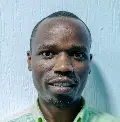
Member of Parliament Etienne Nsabimana Mvano has again brought to the limelight the security threat posed to the country by the FDLR genocidal militia, which is backed by the Congolese government, in a bid to destabilise Rwanda’s security. ALSO READ: DR Congo crisis: Parliament condemns European legislature’s resolution During a plenary sitting of the Parliament of Rwanda, on February 21, the former executive secretary of a sector in Rubavu District which shares a border with DR Congo, recounted his own experience at the hands of FDLR infiltrators, including during an assult on his residence in 2016. ALSO READ: Tshisekedi’s vast armoury in Goma and plan to invade Rwanda On Friday, the Parliament of Rwanda condemned a resolution adopted by the European Parliament, on February 13. Rwandan lawmakers said the EU Parliament had a prejudiced narrative that deliberately obscured the root causes of insecurity in eastern DR Congo and Rwanda’s legitimate security concerns. Among other things, Parliament denounced what it described as the failure of the European Parliament to mention – in its resolution – the FDLR genocidal militia, despite its central role in the ongoing crisis in eastern DR Congo. ALSO READ: Assailants: FDLR was behind Musanze attack Mvano said that DR Congo collaborates with armed groups based on genocide ideology to attack Rwanda. Such armed groups, he said, are based on DR Congo’s territory, and are given support including equipment to destabilise Rwanda's security. Before being an MP, Mvano served as the Executive Secretary of Rubavu District, for 18 years, between 2006 and 2024. He said: “I am saying this as a person who confronted the issue in more than 18 years that I spent working in Rubavu District, on the [Rwanda] border with DR Congo in sectors that border DR Congo, including Bugeshi, Busasamana and Cyanzarwe. ALSO READ: Envoy reiterates Security Council’s need to take Rwanda’s concerns seriously “Attacks were mounted against us many times. There is even one that was launched on my home, in April 2016, at 12 am. I had not stayed there that night. They [FDLR] killed police officers I used to live with, and returned to DR Congo,” he said. Overall, he said, “the attackers killed people, and injured others, in those sectors.” To harbour FDLR militia – by facilitating the concealment of their identification – Mvano said, the Congolese government put them in a group called Nyatura, and later, in mid 2022, it put them in a new group called Wazalendo. The lawmaker explained that the latter consists of people who are indoctrinated with genocide ideology and given guns to kill the Congolese Tutsi. “I am saying this because today, DR Congo attempts to cover up its part in killing the Tutsi Congolese,” he said. Telling the international community that DR Congo’s problems are caused by Rwanda, Mvano indicated, is a strategy the Congolese government adopted to hide its complicity in human rights violations against its own people. He added that Kinshasa does this by convincing the international community, and the European Union, that Rwanda backs armed groups against DR Congo with the aim of looting its minerals. The Parliament of Rwanda, in its resolution, stated that eastern DR Congo has turned into a stronghold for over 250 armed groups, the most prominent of which is the genocidal militia, FDLR, which was formed by perpetrators of the 1994 Genocide against the Tutsi in Rwanda. It held that the massacres instigated by the Congolese government, in the past three decades, with the support of FDLR, resulted in the death of thousands of Congolese Tutsi, and displacement of hundreds of thousands more, fleeing to various countries across the region, including 100,000 Congolese refugees currently hosted in Rwanda. It also referred to the continued attacks and cross-border shelling into Rwanda by the FDLR genocidal militia, with the complicity of the Congolese government, including the deadly assaults in Kinigi (in Musanze District) in October 2019, and lately, in Rubavu District, on January 26, which claimed 16 lives and resulted in 177 civilians being injured and lots of property destroyed. The government has commenced rehabilitation efforts to address the damage caused by shelling from DR Congo, in Rubavu District.